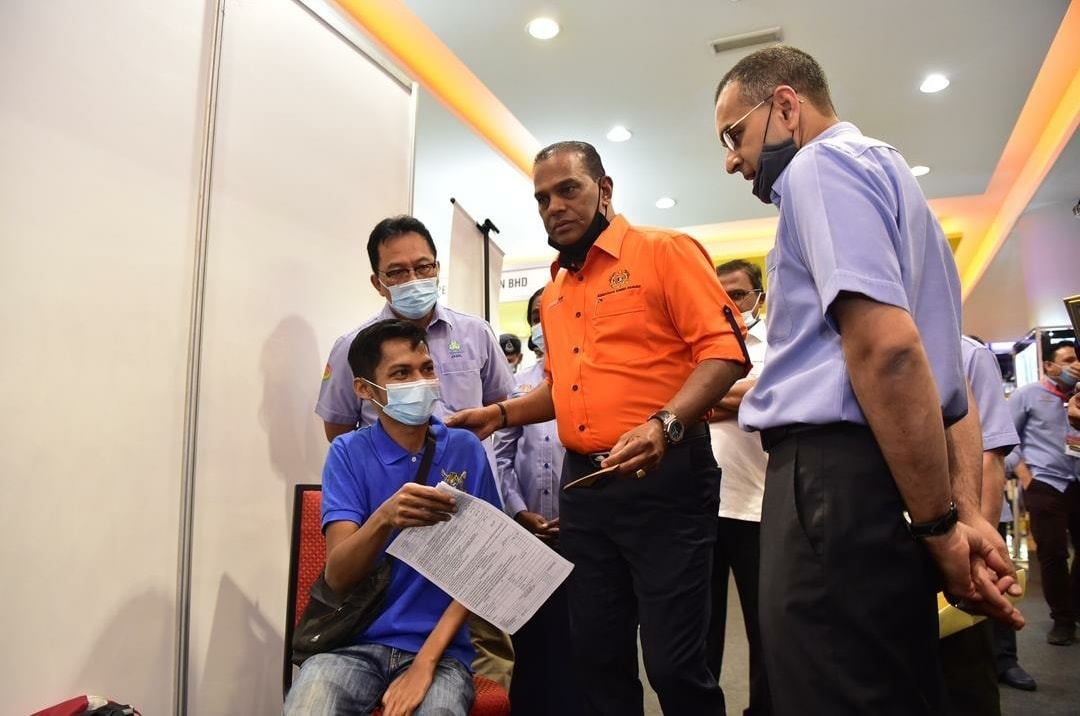
Human Resources Minister R. Ramanan has continued a series of engagement sessions with key gig industry stakeholders as part of efforts to refine the proposed Gig Workers Act, which is expected to be enforced by the end of March.
Ramanan said the session, held in a relaxed setting together with Deputy Minister Datuk Khairul Firdaus Akbar Khan, brought together several major associations representing Malaysia’s gig ecosystem.
Among those present were the Persatuan Penghantar P-Hailing Malaysia (PENGHANTAR), Persatuan Jurusolek Bumiputera Malaysia, Pertubuhan Kebangsaan Jurubahasa dan Penterjemah Bahasa Isyarat Malaysia, Pertubuhan Advokasi dan Kesejahteraan Pekak Malaysia and the Gabungan eHailing Malaysia (GEM).
He said the participation of these groups reflected the diversity within the gig economy, encompassing food delivery riders, e-hailing drivers, professional makeup artists, as well as sign language interpreters and members of the deaf community who are actively engaged in digital platform-based work.
Ramanan expressed appreciation for the continued commitment shown by the associations, noting that many had worked closely with the Ministry of Human Resources (KESUMA) since the early stages of drafting the legislation.
“Formulating a new law requires careful consideration and balance to ensure that workers’ welfare is safeguarded without compromising the sustainability of the industry. Constructive input from industry players is therefore invaluable,” he said in a Facebook post today.
During the session, the ministry provided ample opportunity for representatives to raise concerns, put forward questions and suggest improvements to the proposed legislation.
Key issues discussed included social protection coverage, safety contributions, dispute resolution mechanisms, fair income structures and the role of platform providers in ensuring a balanced distribution of responsibilities.
Ramanan said the matters raised would also be brought forward to subsequent engagement sessions, including discussions with platform providers, to ensure a holistic and inclusive approach.
Although the enforcement date is drawing near, he reaffirmed the ministry’s commitment to conducting face-to-face engagements.
“Effective policies are rooted in a clear understanding of realities on the ground. Listening directly to gig workers offers perspectives that cannot be fully captured through reports or statistics alone,” he said.
He stressed that gig workers are no longer a marginal or temporary segment, but an increasingly vital component of the national economy, with many relying on gig work as their primary source of household income and long-term career choice.
As such, he said the policy framework must be comprehensive, practical and centred on workers’ well-being, while also taking into account the sustainability of the industry.
“No policy is formulated behind closed doors. Every decision undergoes thorough consultation to ensure smooth and effective implementation,” he said.
Ramanan added that the ministry’s top management would carefully examine all feedback received to ensure that the Gig Workers Act not only gains approval, but also establishes a sustainable, progressive and balanced protection framework for both workers and the industry.
-HR HUB