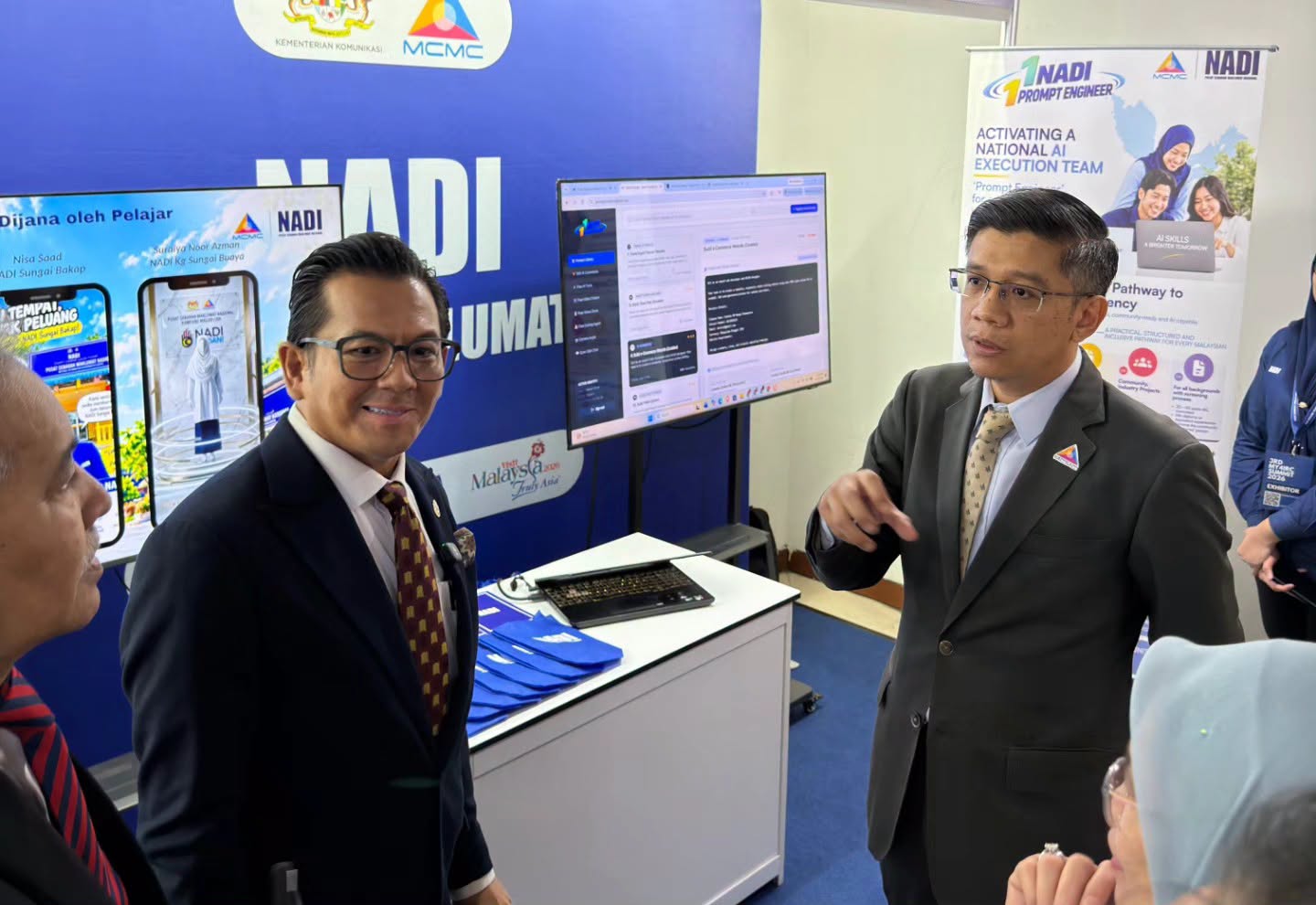
Malaysia must leverage artificial intelligence (AI) to create more high-value employment opportunities, strengthen workforce capabilities and attract quality investments as the country moves towards a technology-driven economy.
Deputy Economy Minister, Datuk Seri Mohd Shahar Abdullah said AI adoption should go beyond technological advancement and contribute directly to economic restructuring, higher household incomes and the development of local innovation capabilities.
He said the success of AI investments should be measured not merely by technological sophistication but also by their ability to develop local talent, expand domestic business participation and retain commercial value within the country.
“This is in line with the 13th Malaysia Plan (13MP) mandate to raise the economic ceiling and floor,” he said at the launch of the third My4IRC Summit 2026 at University of Malaya-Wales.
Mohd Shahar outlined five key priorities to ensure AI becomes a meaningful driver of national development.
These include expanding AI literacy across society, strengthening the pipeline of highly skilled AI professionals and equipping the existing workforce with relevant digital competencies to adapt to technological changes.
He also stressed the importance of developing robust infrastructure, including reliable communications networks, data centres, cloud computing facilities and stronger cybersecurity capabilities.
The government, he said, must also accelerate AI adoption across strategic industries, particularly among small and medium enterprises (SMEs) and mid-tier companies, to reduce operational costs and improve productivity.
Another priority is to strengthen AI-powered global trade by helping Malaysian companies develop proprietary intellectual property and internationally competitive products.
Mohd Shahar emphasised that these priorities must progress together, as investments in infrastructure would deliver limited benefits without skilled workers, while talent development must be supported by sufficient industry demand.
Meanwhile, Malaysia 4IR Consortium (My4IRC) chairman Prof Datuk Dr Sr Omar Osman said the Fourth Industrial Revolution (4IR) was not solely about technological advancement but also involved people, organisational capabilities, leadership and the ability to embrace transformation.
He said closer collaboration between the government, industry and academia was essential to translate research and innovation into practical solutions and economic opportunities.
The two-day summit, themed “Driving Supply Chain and Services Excellence Through Innovation and Technology”, brought together more than 200 participants from government, industry, academia and the technology sector.
University of Malaya-Wales vice-chancellor and chief executive officer, Prof Dr Roselina Ahmad Saufi was also present.
-HR HUB